


Can 50% H2O2 be used in the battery industry?
In the dynamic landscape of the battery industry, continuous innovation and the search for new materials and substances are crucial for enhancing battery performance, efficiency, and sustainability. As a supplier of 50% hydrogen peroxide (H2O2), I often find myself pondering the potential applications of this chemical in the battery sector. In this blog post, we will explore the feasibility and potential benefits of using 50% H2O2 in the battery industry.
Understanding 50% H2O2
Hydrogen peroxide is a well - known chemical compound with the formula H2O2. It is a pale blue liquid in its pure form and is commonly used in various industries due to its strong oxidizing properties. The 50% H2O2 solution we supply 50% Industrial Grade H2O2 Hydrogen Peroxide for Chemical Synthesis is a stable and concentrated form that offers enhanced reactivity compared to lower - concentration solutions.
Current Applications of H2O2 in the Battery Industry
Hydrogen peroxide has already found some applications in the battery field. One of the most notable uses is in fuel cells. In certain types of fuel cells, such as metal - air fuel cells, hydrogen peroxide can act as an oxidant. When used in a fuel cell, H2O2 can react with the fuel (usually a metal like zinc or aluminum) at the anode, while oxygen from the air or the decomposition of H2O2 can react at the cathode. This electrochemical reaction generates electricity.
The 50% concentration of H2O2 can be particularly advantageous in these applications. A higher concentration means more available oxidizing agents per unit volume, which can potentially lead to increased power output. Moreover, the stability of our 50% H2O2 solution 50% Hydrogen Peroxide For Industrial Use ensures a consistent supply of the oxidant during the operation of the fuel cell, reducing the risk of performance fluctuations.
Potential Benefits of Using 50% H2O2 in Batteries
1. Enhanced Energy Density
Energy density is a critical parameter in battery technology. A battery with a higher energy density can store more energy per unit volume or mass. The use of 50% H2O2 as an oxidant in batteries can potentially increase the energy density. Since H2O2 has a relatively high oxygen content, it can provide more oxygen for the electrochemical reactions in the battery, leading to a greater release of energy.
2. Improved Discharge Rate
The discharge rate of a battery determines how quickly it can deliver power. The strong oxidizing nature of 50% H2O2 can accelerate the electrochemical reactions in the battery, resulting in a higher discharge rate. This is particularly important for applications that require high - power output in a short period, such as electric vehicles during acceleration or in portable electronic devices with high - performance requirements.
3. Environmental Friendliness
Compared to some traditional battery chemistries that use heavy metals or toxic substances, hydrogen peroxide is relatively environmentally friendly. When H2O2 decomposes during the battery operation, the main products are water and oxygen, which are non - polluting. Our 50% Industrial Grade Efficient Hydrogen Peroxide H₂O₂ for Environmental Protection is produced with strict quality control to ensure minimal environmental impact.
Challenges and Considerations
1. Safety Concerns
Hydrogen peroxide is a strong oxidizing agent and can be hazardous if not handled properly. The 50% concentration is more reactive and potentially more dangerous than lower - concentration solutions. It can cause severe burns to the skin and eyes and can react violently with flammable materials. Therefore, strict safety protocols must be followed during the storage, transportation, and use of 50% H2O2 in the battery industry.
2. Decomposition and Stability
Hydrogen peroxide is prone to decomposition, especially in the presence of heat, light, or certain catalysts. In a battery environment, where there may be various chemical species and temperature fluctuations, the decomposition of H2O2 can lead to a decrease in its effectiveness as an oxidant. However, our 50% H2O2 solution is formulated with stabilizers to minimize decomposition and ensure long - term stability.
3. Compatibility with Battery Components
The use of 50% H2O2 in batteries requires careful consideration of its compatibility with other battery components, such as electrodes and electrolytes. H2O2 may react with some materials, causing corrosion or degradation of the battery parts. Therefore, extensive research and testing are needed to select the appropriate materials that can work well with 50% H2O2.
Research and Development Efforts
Currently, there is ongoing research in the battery industry to explore the full potential of 50% H2O2. Scientists are investigating new battery designs and chemistries that can better utilize the unique properties of H2O2. For example, some research focuses on developing advanced electrodes that can enhance the reaction between H2O2 and the fuel in a more efficient and stable manner.
Conclusion
In conclusion, 50% H2O2 has significant potential for use in the battery industry. Its high oxidizing power, potential to improve energy density and discharge rate, and relative environmental friendliness make it an attractive option for future battery technologies. However, there are also challenges that need to be addressed, such as safety concerns, decomposition issues, and compatibility with battery components.
As a supplier of high - quality 50% H2O2, we are committed to supporting the battery industry's research and development efforts. Our products are designed to meet the strict requirements of the battery field, and we are constantly working on improving the stability and safety of our 50% H2O2 solutions.
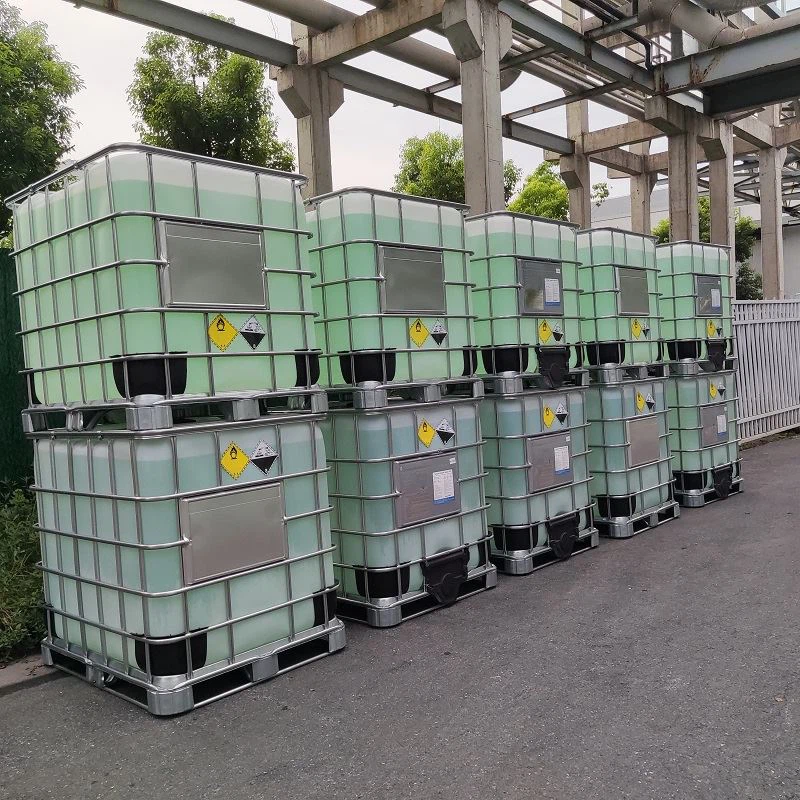

If you are interested in exploring the use of 50% H2O2 in your battery applications or have any questions about our products, we encourage you to contact us for further discussions and potential procurement opportunities.
References
- Bard, A. J., & Faulkner, L. R. (2001). Electrochemical Methods: Fundamentals and Applications. Wiley.
- Larminie, J., & Dicks, A. (2003). Fuel Cell Systems Explained. Wiley.
- Conway, B. E. (1999). Electrochemical Supercapacitors: Scientific Fundamentals and Technological Applications. Kluwer Academic Publishers.