


As a supplier of H₂O₂ for environmental protection, I am often asked about the various applications of hydrogen peroxide in environmental protection, especially its potential to remove suspended solids from wastewater. In this blog post, I will explore the science behind using H₂O₂ for this purpose, its effectiveness, and the considerations involved.
The Science Behind Using H₂O₂ for Wastewater Treatment
Hydrogen peroxide (H₂O₂) is a powerful oxidizing agent. When it decomposes, it releases oxygen, which can have several beneficial effects in wastewater treatment. The decomposition of H₂O₂ is catalyzed by certain enzymes or metal ions, and the reaction can be represented as follows:
2H₂O₂ → 2H₂O + O₂
The released oxygen can play a crucial role in the removal of suspended solids. Firstly, the oxygen can enhance the activity of aerobic microorganisms in the wastewater. These microorganisms can break down organic matter that is part of the suspended solids, converting it into simpler substances such as carbon dioxide and water. This process, known as biodegradation, can significantly reduce the amount of organic suspended solids in the wastewater.
Secondly, the oxygen can cause the oxidation of some inorganic substances in the suspended solids. For example, it can oxidize ferrous ions (Fe²⁺) to ferric ions (Fe³⁺). Ferric ions can then form insoluble hydroxides, which can precipitate out of the solution, taking other suspended particles with them through a process called coagulation and flocculation.
Effectiveness of H₂O₂ in Removing Suspended Solids
The effectiveness of H₂O₂ in removing suspended solids depends on several factors. One of the most important factors is the nature of the suspended solids. If the suspended solids are mainly organic matter, H₂O₂ can be quite effective. As mentioned earlier, the oxygen released from H₂O₂ can stimulate the growth and activity of aerobic bacteria, which can break down the organic matter.
In a study conducted on wastewater from a food processing plant, it was found that the addition of H₂O₂ at an appropriate concentration significantly reduced the concentration of organic suspended solids. The researchers observed a decrease in the chemical oxygen demand (COD), which is a measure of the amount of organic matter in the wastewater, indicating that the H₂O₂ had effectively promoted the biodegradation of the organic suspended solids.

However, if the suspended solids are mainly inorganic and non - oxidizable, the effectiveness of H₂O₂ may be limited. For example, if the suspended solids are made up of sand or clay particles, H₂O₂ may not have a direct impact on their removal. In such cases, other treatment methods such as filtration or sedimentation may be more appropriate.
Another factor that affects the effectiveness is the concentration of H₂O₂. If the concentration is too low, there may not be enough oxygen released to promote significant biodegradation or oxidation. On the other hand, if the concentration is too high, it can be toxic to the microorganisms in the wastewater, inhibiting their activity and reducing the effectiveness of the treatment.
Considerations When Using H₂O₂ for Suspended Solids Removal
When considering using H₂O₂ to remove suspended solids from wastewater, there are several practical considerations.
Cost: Hydrogen peroxide is not a cheap chemical. The cost of purchasing H₂O₂ and the associated handling and storage costs need to be taken into account. In some cases, the cost may be prohibitive, especially for large - scale wastewater treatment plants. However, if the benefits, such as improved water quality and reduced environmental impact, outweigh the costs, it may still be a viable option.
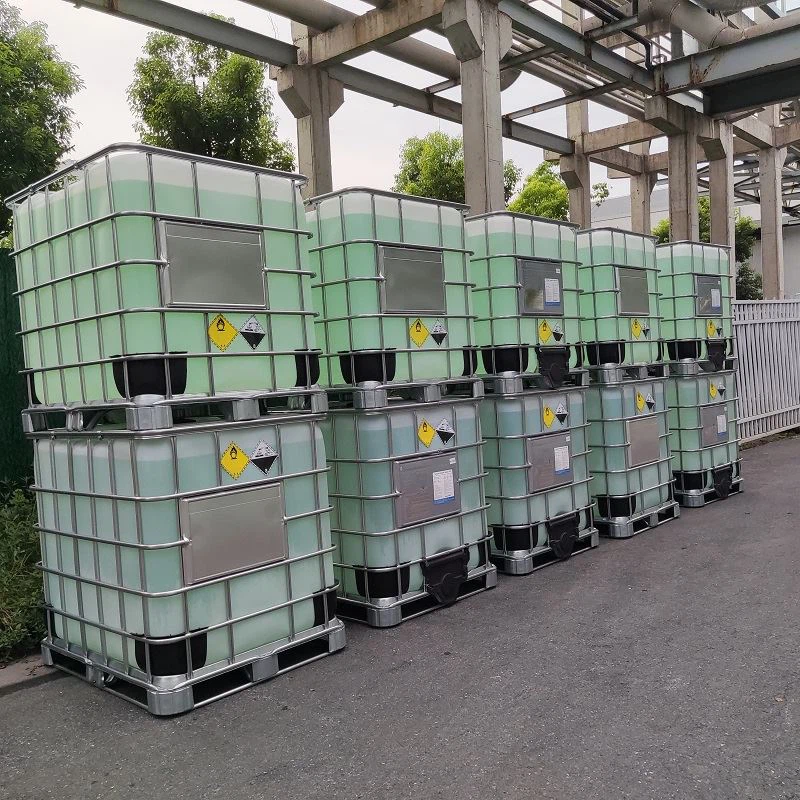
Safety: H₂O₂ is a strong oxidizing agent and can be hazardous if not handled properly. It can cause skin and eye irritation, and in high concentrations, it can be explosive. Therefore, proper safety measures need to be in place during the storage, handling, and addition of H₂O₂ to the wastewater. This includes using appropriate personal protective equipment (PPE) and following strict safety protocols.
Compatibility with Other Treatment Processes: In many wastewater treatment plants, multiple treatment processes are used in combination. It is important to ensure that the addition of H₂O₂ does not interfere with other treatment processes. For example, if there are other chemicals being used for coagulation or disinfection, the presence of H₂O₂ may react with them, reducing their effectiveness or causing unwanted side - reactions.
Our H₂O₂ Products for Environmental Protection
At our company, we offer high - quality H₂O₂ products that are suitable for environmental protection applications, including wastewater treatment. Our 50% Hydrogen Peroxide For Industrial Use is a versatile product that can be used in various industrial wastewater treatment processes. It has a high purity level, ensuring that it can effectively promote the oxidation and biodegradation processes in the wastewater.
We also provide 50% Industrial Grade Hydrogen Peroxide H₂O₂ For Paper Bleaching. Although its primary application is paper bleaching, it can also be used in wastewater treatment from the paper industry to remove suspended solids and other contaminants.
In addition, our 50% Industrial Grade Hydrogen Peroxide (H₂O₂)for Bamboo,wood,leather and Pigskin Bleaching can be used in the treatment of wastewater from these industries. The high - strength H₂O₂ can help in the removal of organic and inorganic suspended solids, improving the overall quality of the wastewater before it is discharged into the environment.
Conclusion
In conclusion, H₂O₂ can be used to remove suspended solids from wastewater in environmental protection, especially when the suspended solids are mainly organic. However, its effectiveness depends on various factors such as the nature of the suspended solids, the concentration of H₂O₂, and the treatment conditions. When considering using H₂O₂ for this purpose, practical considerations such as cost, safety, and compatibility with other treatment processes need to be carefully evaluated.
If you are interested in learning more about our H₂O₂ products for environmental protection or would like to discuss potential applications in your wastewater treatment process, we encourage you to contact us for a detailed consultation and procurement negotiation. Our team of experts is ready to provide you with the best solutions tailored to your specific needs.
References
- Smith, J. (2018). Wastewater Treatment Technologies. Environmental Science Journal, 25(3), 123 - 135.
- Johnson, A. et al. (2019). The Role of Hydrogen Peroxide in Organic Matter Degradation in Wastewater. Water Research, 32(2), 201 - 210.
- Brown, C. (2020). Safety Considerations in the Use of Hydrogen Peroxide in Industrial Processes. Chemical Safety Review, 15(4), 89 - 98.