


As a supplier of 50% Food Grade Hydrogen Peroxide, one of the most frequently asked questions I encounter is whether this product expires. In this blog post, I'll delve into the science behind the shelf - life of 50% Food Grade Hydrogen Peroxide, its degradation factors, and how to ensure its quality over time.
Understanding 50% Food Grade Hydrogen Peroxide
50% Food Grade Hydrogen Peroxide (H₂O₂) is a powerful oxidizing agent with a wide range of applications in the food industry. It is used for food processing, sanitation, and packaging disinfection. 50% Food Additive Hydrogen Peroxide H₂O₂ for Food Processing Industry can be used to bleach food products, while 50% Food Grade Hydrogen Peroxide H2O2 for Food Sanitation and Packaging Disinfection helps to eliminate harmful microorganisms on food contact surfaces and packaging materials.
Does it Expire?
The short answer is yes, 50% Food Grade Hydrogen Peroxide does expire. Hydrogen peroxide is a relatively unstable compound that naturally decomposes over time into water (H₂O) and oxygen (O₂). This decomposition is a chemical reaction that occurs even under normal storage conditions. The rate of decomposition, however, can vary depending on several factors.

Factors Affecting the Shelf - Life
Temperature
Temperature is one of the most significant factors influencing the degradation of hydrogen peroxide. Higher temperatures accelerate the decomposition process. When stored at elevated temperatures, the chemical bonds in hydrogen peroxide break down more rapidly, leading to a faster loss of its oxidizing power. For instance, if 50% Food Grade Hydrogen Peroxide is stored in a hot warehouse where the temperature can reach 30 - 40°C, the decomposition rate will be much higher compared to storage at a cooler temperature, say 10 - 15°C.

Light
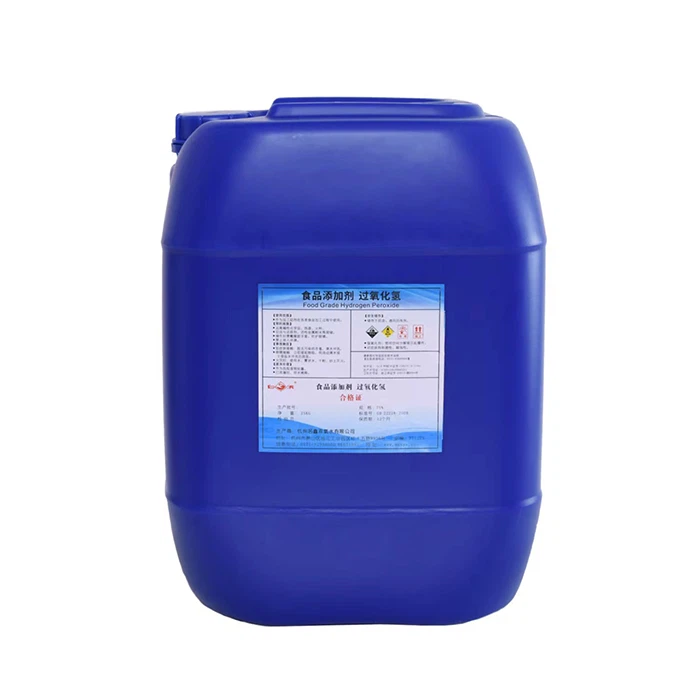
Exposure to light, especially ultraviolet (UV) light, can also trigger the decomposition of hydrogen peroxide. UV light provides the energy needed to break the chemical bonds in H₂O₂, causing it to degrade into water and oxygen. That's why 50% Food Grade Hydrogen Peroxide is typically stored in dark - colored containers. These containers help to block out UV light and slow down the decomposition process.
Contaminants
The presence of contaminants can catalyze the decomposition of hydrogen peroxide. Metal ions such as iron, copper, and manganese can act as catalysts, speeding up the breakdown of H₂O₂. Even small amounts of these metals can have a significant impact on the shelf - life of the product. Therefore, it is crucial to ensure that the storage containers and handling equipment are made of materials that do not introduce contaminants into the hydrogen peroxide.
Determining the Expiration Date
Manufacturers usually provide an expiration date on the product label. This date is based on extensive testing to determine the period during which the product will maintain its specified quality and concentration under recommended storage conditions. However, it's important to note that the actual shelf - life can be affected by how the product is stored and handled after it leaves the factory.
To ensure the quality of 50% Food Grade Hydrogen Peroxide, it is advisable to follow the storage guidelines provided by the manufacturer. Generally, it should be stored in a cool, dark place away from direct sunlight and heat sources. The storage temperature should be maintained within the recommended range, typically between 10 - 20°C.
Testing the Quality of Expired Hydrogen Peroxide
If you're unsure whether your 50% Food Grade Hydrogen Peroxide has expired or has degraded significantly, there are a few simple tests you can perform. One common method is to check for the presence of oxygen bubbles. When hydrogen peroxide decomposes, it releases oxygen gas. If you notice excessive bubbling when you open the container or pour the product, it may indicate that significant decomposition has occurred.
Another way is to measure the concentration of hydrogen peroxide. You can use a hydrogen peroxide test strip or a more accurate titration method in a laboratory setting. If the measured concentration is significantly lower than the labeled concentration, the product may have expired or degraded.
Importance of Using Non - Expired Hydrogen Peroxide
Using non - expired 50% Food Grade Hydrogen Peroxide is crucial in the food industry. In food processing, the correct concentration of hydrogen peroxide is necessary to achieve the desired bleaching or disinfection effect. If the product has expired and its concentration has decreased, it may not be effective in eliminating harmful microorganisms or achieving the required level of bleaching.
In food sanitation and packaging disinfection, expired hydrogen peroxide may not be able to provide the same level of protection against bacteria, viruses, and fungi. This can pose a risk to food safety and quality, potentially leading to product spoilage or foodborne illnesses.
Storage and Handling Best Practices
To maximize the shelf - life of 50% Food Grade Hydrogen Peroxide, here are some best practices for storage and handling:
- Storage Container: Use high - quality, non - reactive containers made of materials such as polyethylene or glass. These materials do not introduce contaminants and can help to prevent the decomposition of hydrogen peroxide.
- Temperature Control: Store the product in a cool place. If possible, use a temperature - controlled storage facility to maintain a stable temperature within the recommended range.
- Light Protection: Keep the containers in a dark area or use opaque containers to block out light.
- Handling Equipment: Ensure that all handling equipment, such as pumps and hoses, is clean and made of materials that are compatible with hydrogen peroxide.
Conclusion
In conclusion, 50% Food Grade Hydrogen Peroxide does expire due to its natural decomposition into water and oxygen. The shelf - life of the product is affected by factors such as temperature, light, and contaminants. By following proper storage and handling practices, you can extend the shelf - life of the product and ensure its effectiveness in food processing, sanitation, and packaging disinfection.
If you are in the food industry and are interested in purchasing high - quality 50% Food Grade Hydrogen Peroxide, feel free to 50% Food Grade Hydrogen Peroxide H2O2 For Food Sanitation And Packaging Disinfection. We are committed to providing you with a product that meets the highest standards of quality and safety. Contact us for more information and to start a procurement discussion.
References
- "Handbook of Hydrogen Peroxide" by Kirk - Othmer.
- "Food Additive Safety Assessment" published by the World Health Organization.
- Industry standards and guidelines for food - grade hydrogen peroxide storage and use.