


Hey there! I'm a supplier of 50% industrial hydrogen peroxide. Today, I wanna chat about how this powerful chemical reacts with metals. It's a pretty interesting topic, especially if you're in industries like manufacturing, chemical synthesis, or any area that deals with both hydrogen peroxide and metals.
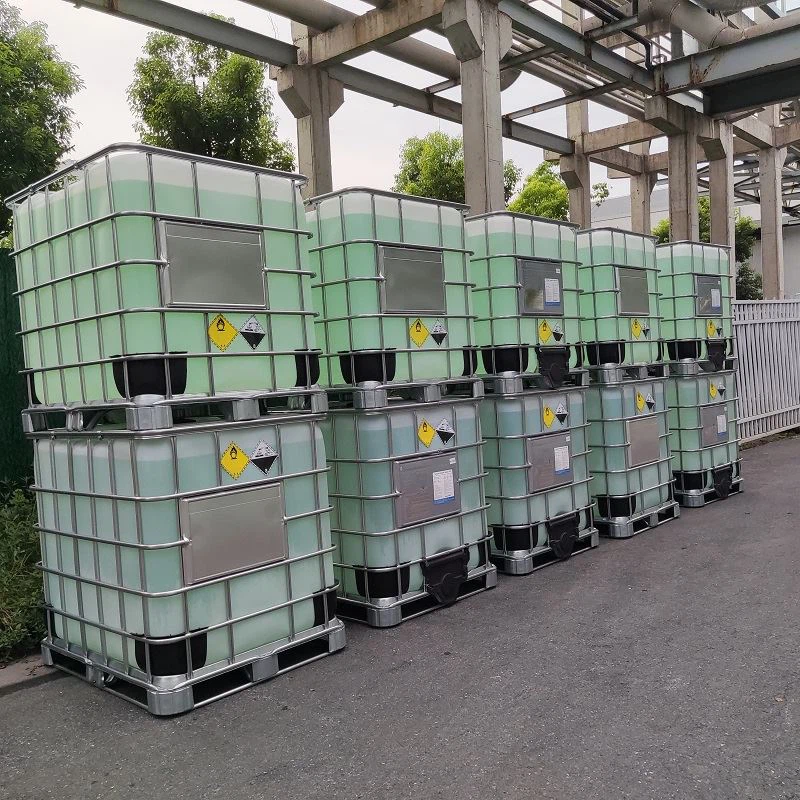
First off, let's quickly understand what 50% industrial hydrogen peroxide is. It's a strong oxidizing agent with a hydrogen peroxide concentration of 50% in an aqueous solution. We offer different products like the 500L Hydrogen Peroxide Aqueous Solution 50%, 50% Industrial Grade H2O2 Hydrogen Peroxide for Chemical Synthesis, and 50% Hydrogen Peroxide For Industrial Use. Now, onto the reactions with metals.
Reaction Mechanisms
When 50% industrial hydrogen peroxide comes into contact with metals, the reactions depend mainly on the metal's reactivity and the conditions of the reaction. Hydrogen peroxide can decompose into water and oxygen through the following reaction: 2H₂O₂ → 2H₂O + O₂. This decomposition can be accelerated by the presence of metals, which act as catalysts.
Let's take a look at some common metals and how they react.
Iron (Fe)
Iron is a widely used metal, and its reaction with 50% hydrogen peroxide is quite significant. When iron is exposed to hydrogen peroxide, a redox reaction occurs. Iron gets oxidized. Initially, iron can react to form iron(II) hydroxide or iron(II) ions in an acidic or neutral medium. The iron(II) ions can then further react with more hydrogen peroxide to form iron(III) compounds.
In the presence of an excess of hydrogen peroxide and under aerobic conditions, the overall reaction can be represented as: 2Fe + 3H₂O₂ → 2Fe(OH)₃. This reaction is often used in wastewater treatment to remove iron impurities. The iron(III) hydroxide formed can precipitate out, making it easier to separate from the water.
Aluminum (Al)
Aluminum is a reactive metal, but it has a thin oxide layer on its surface that normally protects it from corrosion. However, 50% hydrogen peroxide can react with this oxide layer and expose the underlying aluminum metal. Once the aluminum is exposed, it reacts vigorously with hydrogen peroxide.
The reaction can be written as: 2Al + 3H₂O₂ → Al₂O₃ + 3H₂O. This reaction releases a large amount of heat, and sometimes it can be even explosive if the reaction conditions are not properly controlled. This property makes it important to handle mixtures of aluminum and hydrogen peroxide with extreme caution.

Copper (Cu)
Copper is a relatively less reactive metal compared to iron and aluminum. But it still reacts with 50% hydrogen peroxide, especially in the presence of an acid. The reaction is a two - step process. First, copper can react with hydrogen peroxide in an acidic medium to form copper(II) ions.
For example, in the presence of sulfuric acid: Cu + H₂O₂ + H₂SO₄ → CuSO₄+ 2H₂O. The copper(II) ions formed can have various uses in the chemical and electroplating industries.
Factors Affecting the Reactions
Concentration of Hydrogen Peroxide
The 50% concentration of our industrial hydrogen peroxide is quite high. A higher concentration generally means a more vigorous reaction with metals. At lower concentrations, the reaction rate may be slower, and in some cases, the reaction may not occur at all. The high concentration of our product provides a strong oxidizing environment, which can speed up the oxidation of metals.
Temperature
Temperature plays a crucial role in these reactions. Higher temperatures usually increase the reaction rate. For example, when the temperature is raised, the decomposition of hydrogen peroxide into water and oxygen is accelerated. This, in turn, can increase the availability of reactive oxygen species, which react with metals more rapidly. However, too high a temperature can also lead to an uncontrolled reaction, especially in the case of reactive metals like aluminum.
pH of the Solution
The pH of the solution in which the reaction takes place can significantly affect the reaction between 50% industrial hydrogen peroxide and metals. In an acidic medium, many metals react more readily with hydrogen peroxide. For example, copper's reaction with hydrogen peroxide is enhanced in the presence of an acid, as we saw in the previous example. In a basic medium, the reaction mechanisms can be different, and sometimes the formation of metal hydroxides can be favored.
Industrial Applications
Metal Cleaning and Surface Treatment
The reaction of 50% industrial hydrogen peroxide with metals can be used for cleaning and surface treatment. For example, in the electronics industry, hydrogen peroxide can be used to clean copper surfaces. The reaction helps remove impurities and oxides from the copper, leaving a clean and reactive surface for further processing, such as soldering or plating.
Oxidation of Metal Compounds
In the chemical synthesis industry, the oxidation of metal compounds using hydrogen peroxide is a common process. For instance, the oxidation of iron(II) compounds to iron(III) compounds can be used in the production of pigments. Our 50% Industrial Grade H2O2 Hydrogen Peroxide for Chemical Synthesis is ideal for such applications.
Safety Considerations
When dealing with the reaction between 50% industrial hydrogen peroxide and metals, safety is of utmost importance. Hydrogen peroxide is a strong oxidizing agent, and its reactions with metals can be exothermic and sometimes explosive.
It's important to wear proper protective equipment, such as gloves, goggles, and a lab coat. The reactions should be carried out in a well - ventilated area to prevent the build - up of oxygen gas, which can be a fire hazard. Also, the storage of hydrogen peroxide and metals should be separate to avoid accidental contact.
Conclusion
In conclusion, the reaction of 50% industrial hydrogen peroxide with metals is a complex but fascinating topic. The reactions vary depending on the type of metal, the reaction conditions, and other factors. These reactions have numerous industrial applications, from metal cleaning to chemical synthesis.
If you're in an industry that could benefit from our 50% industrial hydrogen peroxide products, whether it's for reacting with metals or other uses, don't hesitate to reach out for a purchase discussion. We're here to provide you with high - quality products and the support you need.
References
- Cotton, F. A., & Wilkinson, G. (1988). Advanced Inorganic Chemistry. John Wiley & Sons.
- Housecroft, C. E., & Sharpe, A. G. (2012). Inorganic Chemistry. Pearson Education.