


Efficient hydrogen peroxide is a powerful and versatile chemical that has a wide range of applications across various industries. As a leading supplier of efficient hydrogen peroxide, I am often asked about how it interacts with metals. In this blog post, I will delve into the fascinating world of the interaction between efficient hydrogen peroxide and metals, exploring the chemical reactions, practical applications, and safety considerations.
Chemical Reactions between Hydrogen Peroxide and Metals
Hydrogen peroxide (H₂O₂) is a strong oxidizing agent, which means it has a high tendency to accept electrons from other substances. When it comes into contact with metals, the nature of the reaction depends on several factors, including the type of metal, the concentration of hydrogen peroxide, and the pH of the solution.

Reaction with Reactive Metals
Metals such as iron, zinc, and aluminum are relatively reactive and can react vigorously with hydrogen peroxide. For example, when iron reacts with hydrogen peroxide in an acidic solution, the following reaction occurs:
2Fe + 3H₂O₂ + 6H⁺ → 2Fe³⁺ + 6H₂O
In this reaction, iron is oxidized from its elemental state (Fe) to the ferric ion (Fe³⁺), while hydrogen peroxide is reduced to water. The ferric ions can further react with hydroxide ions in the solution to form iron(III) hydroxide, which is a brown precipitate.
Similarly, zinc reacts with hydrogen peroxide to form zinc ions and water:
Zn + H₂O₂ + 2H⁺ → Zn²⁺ + 2H₂O
These reactions are exothermic, meaning they release heat. In some cases, the heat generated can be sufficient to cause the solution to boil or even ignite flammable materials in the vicinity.
Reaction with Noble Metals
Noble metals such as gold, platinum, and silver are relatively inert and do not react readily with hydrogen peroxide under normal conditions. However, in the presence of a catalyst or under specific conditions, they can undergo oxidation. For example, gold can be oxidized by hydrogen peroxide in the presence of a cyanide ion:
2Au + 4CN⁻ + H₂O₂ + 2H₂O → 2[Au(CN)₂]⁻ + 2OH⁻ + 2H₂O
This reaction is used in the mining industry to extract gold from its ores.
Reaction with Transition Metals
Transition metals such as copper, nickel, and cobalt can react with hydrogen peroxide in a variety of ways, depending on the oxidation state of the metal and the reaction conditions. For example, copper can react with hydrogen peroxide in an acidic solution to form copper(II) ions:
Cu + H₂O₂ + 2H⁺ → Cu²⁺ + 2H₂O
However, in the presence of ammonia, copper can form a complex ion with ammonia and hydrogen peroxide:
2Cu + 4NH₃ + 2H₂O₂ → 2[Cu(NH₃)₂]²⁺ + 2OH⁻ + 2H₂O
These reactions are important in many industrial processes, such as electroplating and metal finishing.
Practical Applications of the Interaction between Hydrogen Peroxide and Metals
The interaction between hydrogen peroxide and metals has many practical applications in various industries. Here are some examples:
Metal Cleaning and Surface Treatment
Hydrogen peroxide can be used to clean and passivate metal surfaces. For example, it can be used to remove rust and scale from iron and steel surfaces. The oxidation reaction between hydrogen peroxide and iron oxide (rust) converts the rust into a soluble iron salt, which can be easily washed away.
In addition, hydrogen peroxide can be used to passivate metal surfaces, which means it forms a protective layer on the surface of the metal to prevent further corrosion. This is commonly used in the food and beverage industry to protect stainless steel equipment from corrosion.
Metal Etching
Hydrogen peroxide can be used as an etchant for metals such as copper and aluminum. In the electronics industry, it is used to etch copper circuits on printed circuit boards (PCBs). The oxidation reaction between hydrogen peroxide and copper removes the unwanted copper, leaving behind the desired circuit pattern.
Metal Catalysis
Some metals can act as catalysts for the decomposition of hydrogen peroxide. For example, platinum and palladium are commonly used as catalysts in fuel cells, where they catalyze the reaction between hydrogen and oxygen to produce electricity. In addition, some transition metals such as manganese and iron can catalyze the decomposition of hydrogen peroxide to produce oxygen and water:
2H₂O₂ → 2H₂O + O₂
This reaction is used in the production of oxygen in some industrial processes.
Safety Considerations
When working with hydrogen peroxide and metals, it is important to take appropriate safety precautions. Here are some safety considerations:
Corrosive and Oxidizing Properties
Hydrogen peroxide is a corrosive and oxidizing agent, which means it can cause severe burns and damage to skin, eyes, and respiratory system. It can also react violently with flammable materials, causing fires and explosions. Therefore, it is important to wear appropriate personal protective equipment (PPE), such as gloves, goggles, and a lab coat, when handling hydrogen peroxide.
Heat Generation
As mentioned earlier, the reaction between hydrogen peroxide and metals can be exothermic, meaning it releases heat. In some cases, the heat generated can be sufficient to cause the solution to boil or even ignite flammable materials in the vicinity. Therefore, it is important to monitor the temperature of the solution during the reaction and take appropriate measures to prevent overheating.
Catalyst Contamination
Some metals can act as catalysts for the decomposition of hydrogen peroxide. Therefore, it is important to avoid contamination of hydrogen peroxide with metals or metal ions, as this can cause the hydrogen peroxide to decompose rapidly, releasing oxygen and heat.
Our Products
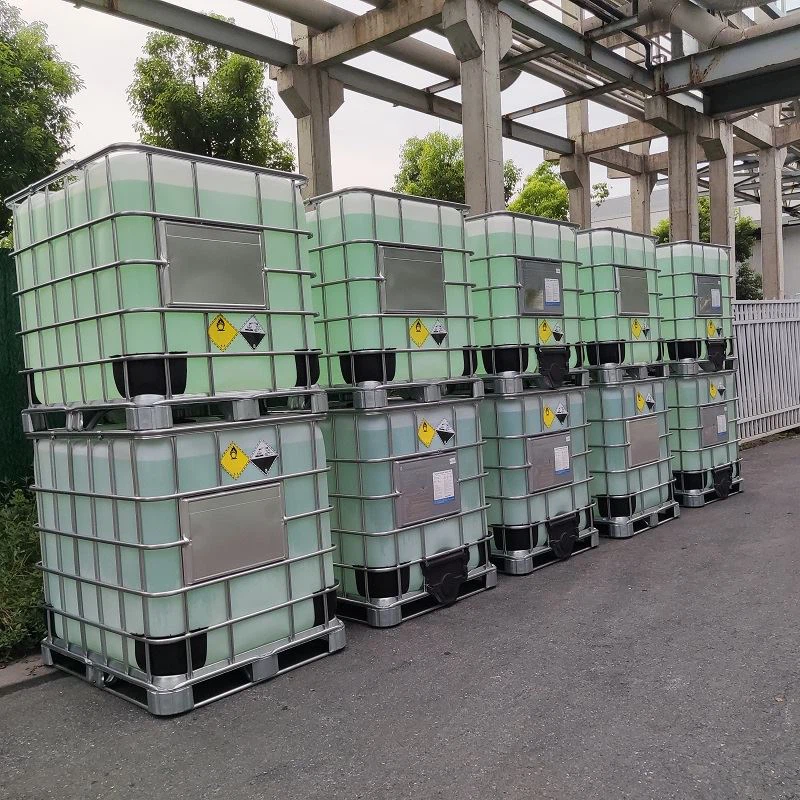
As a supplier of efficient hydrogen peroxide, we offer a wide range of products to meet the needs of various industries. Our products include 50% Hydrogen Peroxide For Industrial Use, 500L Hydrogen Peroxide 50%, and 50% Industrial Grade H2O2 Hydrogen Peroxide for Chemical Synthesis. Our products are of high quality and purity, and are suitable for a variety of applications, including metal cleaning, surface treatment, etching, and catalysis.
Conclusion
The interaction between efficient hydrogen peroxide and metals is a complex and fascinating topic that has many practical applications in various industries. By understanding the chemical reactions, practical applications, and safety considerations, we can use hydrogen peroxide effectively and safely in our work. If you are interested in learning more about our products or have any questions about the interaction between hydrogen peroxide and metals, please contact us to discuss your requirements. We look forward to working with you to meet your needs.
References
- Housecroft, C. E., & Sharpe, A. G. (2012). Inorganic Chemistry (4th ed.). Pearson.
- Cotton, F. A., Wilkinson, G., Murillo, C. A., & Bochmann, M. (1999). Advanced Inorganic Chemistry (6th ed.). Wiley-Interscience.
- Harris, D. C. (2015). Quantitative Chemical Analysis (9th ed.). W. H. Freeman.