


As a supplier of 50% H₂O₂ for paper bleaching, I've witnessed firsthand the transformative power of this chemical in the paper industry. One question that often arises is: What is the impact of 50% H₂O₂ on the ink absorption of paper after bleaching? In this blog post, I'll delve into this topic, exploring the science behind it and its implications for the paper and printing industries.
The Basics of Paper Bleaching with 50% H₂O₂
Before we discuss the impact on ink absorption, let's understand the bleaching process. Hydrogen peroxide (H₂O₂) is a versatile and environmentally friendly bleaching agent. When used in a 50% concentration, it provides a powerful oxidizing effect that can break down the chromophores (color - causing compounds) in paper pulp.
The bleaching reaction of H₂O₂ in an alkaline medium can be represented as follows:
H₂O₂ + OH⁻ → HO₂⁻ + H₂O
The hydroperoxide anion (HO₂⁻) is the active bleaching species. It attacks the double bonds in the chromophores, converting them into colorless or less - colored compounds. This process not only brightens the paper but also improves its overall quality by removing impurities and lignin.
How 50% H₂O₂ Affects the Structure of Paper
The bleaching process with 50% H₂O₂ can have a significant impact on the physical and chemical structure of paper. Lignin, a complex polymer that binds cellulose fibers in wood pulp, is one of the main targets of the bleaching process. As H₂O₂ breaks down lignin, it exposes more cellulose fibers on the paper surface.
Cellulose is a hydrophilic polymer, which means it has an affinity for water. During the bleaching process, the removal of lignin and the exposure of cellulose can increase the hydrophilicity of the paper. This change in hydrophilicity is closely related to the ink absorption properties of the paper.
Impact on Ink Absorption
Increased Ink Absorption
One of the most noticeable effects of 50% H₂O₂ bleaching on paper is the potential increase in ink absorption. The removal of lignin and the exposure of cellulose fibers create more pores and capillary channels in the paper structure. When ink is applied to the paper, these pores and channels act as pathways for the ink to penetrate the paper.
In the printing industry, ink absorption is a crucial factor. For example, in offset printing, the ink needs to be absorbed quickly and evenly to prevent smudging and ensure sharp image quality. Papers bleached with 50% H₂O₂ often show better ink absorption characteristics, which can lead to improved print quality.
Uniformity of Ink Absorption
Another advantage of using 50% H₂O₂ for paper bleaching is the improvement in the uniformity of ink absorption. The bleaching process can make the paper surface more homogeneous. Lignin is not evenly distributed in the paper pulp, and its removal can eliminate the unevenness in the paper structure. As a result, the ink can spread more evenly across the paper surface, reducing the likelihood of color variations and streaks in the printed image.
Factors Influencing the Impact on Ink Absorption
Concentration of H₂O₂
Although we are focusing on a 50% concentration of H₂O₂, it's important to note that the concentration can affect the degree of ink absorption. Higher concentrations of H₂O₂ can lead to more extensive lignin removal and a greater increase in the hydrophilicity of the paper. However, extremely high concentrations may also cause damage to the cellulose fibers, which can have a negative impact on the paper's strength and other properties.
Bleaching Conditions
The temperature, pH, and reaction time during the bleaching process also play a role. For example, a higher temperature can accelerate the bleaching reaction, but it may also cause more severe damage to the paper structure if not controlled properly. The pH of the bleaching solution is also critical. An alkaline pH is typically used to activate the H₂O₂, but an overly alkaline environment can lead to the degradation of cellulose.

Implications for the Paper and Printing Industries
Improved Print Quality
The enhanced ink absorption and uniformity provided by 50% H₂O₂ bleaching can lead to better - quality printed materials. This is particularly important for high - end printing applications such as magazines, brochures, and packaging. The sharpness and color accuracy of the printed images can be significantly improved, which can enhance the visual appeal of the final product.
Cost - Efficiency
From a cost - efficiency perspective, papers with better ink absorption properties can reduce the amount of ink required for printing. Since the ink can be absorbed more effectively, less ink is wasted, which can result in cost savings for printers.
Our Products and Their Benefits
As a supplier of 50% H₂O₂ for paper bleaching, we offer high - quality products that are specifically formulated for the paper industry. Our 50% Hydrogen Peroxide For Industrial Use is carefully produced to ensure consistent quality and performance.
Our 50% Industrial Grade Hydrogen Peroxide (H₂O₂) for Bamboo, wood, leather and Pigskin Bleaching is suitable for a wide range of paper pulps, including those made from bamboo and wood. It can effectively bleach the pulp while maintaining the integrity of the cellulose fibers, resulting in papers with excellent ink absorption properties.
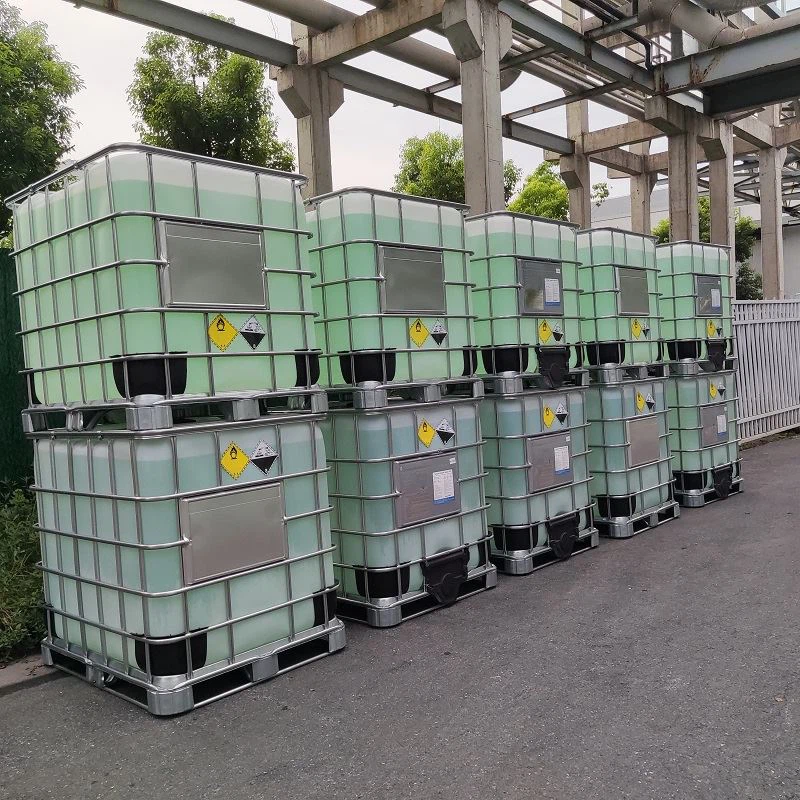
We also provide 500L Hydrogen Peroxide Aqueous Solution 50%, which is convenient for large - scale paper bleaching operations. Our products are backed by our technical support team, who can provide guidance on the optimal use of our H₂O₂ products in the paper bleaching process.
Contact Us for Procurement and Consultation
If you are in the paper or printing industry and are interested in improving the quality of your products through better paper bleaching and ink absorption, we invite you to contact us for procurement and consultation. Our team of experts can help you determine the best solution for your specific needs, whether you are a small - scale printer or a large - scale paper manufacturer.
References
- Gullichsen, J., & Fogelholm, C. - J. (Eds.). (2000). Chemical Pulping. John Wiley & Sons.
- Hubbe, M. A., Rojas, O. J., & Pawlak, J. J. (2007). Surface Chemistry and Surface Interactions in Papermaking. TAPPI Press.
- Smook, G. A. (2002). Handbook for Pulp & Paper Technologists. Angus Wilde Publications.