


Hey there! As a supplier of H2O2 for the textile industry, I've been getting a lot of questions lately about the relationship between H2O2 and textile color uniformity. So, I thought I'd take a few minutes to break it down for you.
First things first, let's talk about what H2O2 is and why it's so important in the textile industry. Hydrogen peroxide (H2O2) is a powerful oxidizing agent that's commonly used in textile processing for bleaching, desizing, and mercerizing. It's a versatile chemical that can be used on a wide range of fibers, including cotton, wool, silk, and synthetic fibers.
One of the main benefits of using H2O2 in textile processing is its ability to remove natural impurities and colorants from the fibers. This helps to create a clean, white base for dyeing and printing, which is essential for achieving uniform color across the fabric. When the fibers are properly bleached with H2O2, they absorb the dye more evenly, resulting in a more consistent color throughout the fabric.
But how exactly does H2O2 achieve this? Well, when H2O2 is applied to the fibers, it breaks down into water and oxygen. The oxygen released during this process reacts with the natural colorants and impurities in the fibers, oxidizing them and converting them into water-soluble compounds that can be easily washed away. This leaves the fibers clean and ready for dyeing.
In addition to its bleaching properties, H2O2 also has some other benefits for textile color uniformity. For example, it can help to improve the wetting and penetration of the dye into the fibers. When the fibers are properly wetted and penetrated by the dye, it ensures that the color is evenly distributed throughout the fabric. H2O2 can also help to reduce the risk of color bleeding and fading, which can occur when the dye is not properly fixed to the fibers.
Of course, like any chemical, H2O2 needs to be used properly in order to achieve the best results. The concentration of H2O2, the temperature, and the pH of the solution all need to be carefully controlled to ensure that the fibers are not damaged and that the color uniformity is maximized. That's why it's important to work with a reputable supplier who can provide you with the right products and technical support.
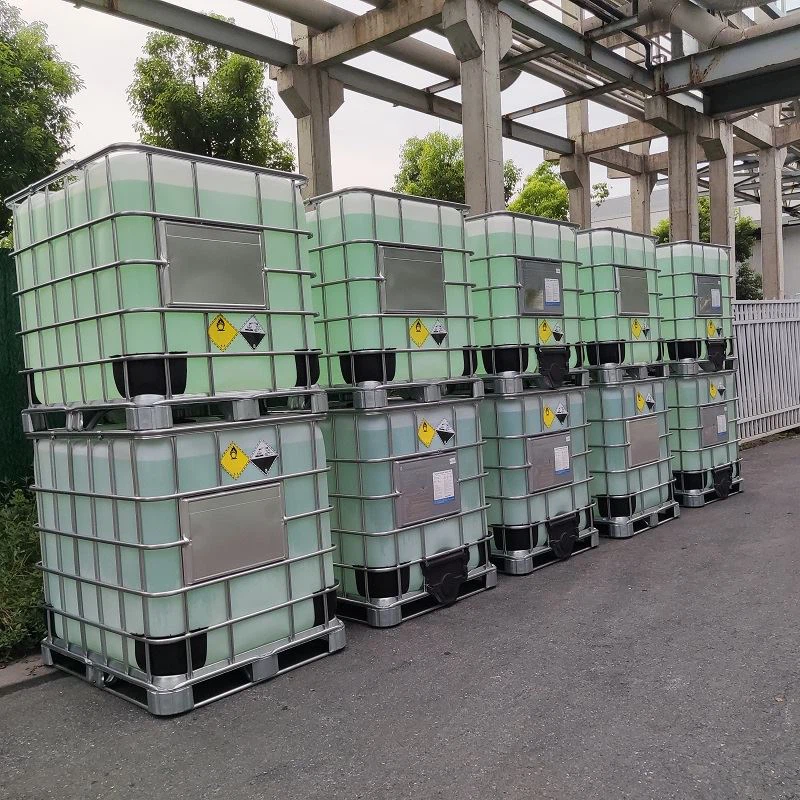

At our company, we offer a range of H2O2 products specifically designed for the textile industry. Our 50% Industrial Grade Hydrogen Peroxide (H₂O₂)for Bamboo,wood,leather and Pigskin Bleaching is a high-quality product that's ideal for bleaching a variety of fibers, including bamboo, wood, leather, and pigskin. It's a cost-effective solution that can help you to achieve uniform color across your fabrics.
We also offer 50% Hydrogen Peroxide For Industrial Use, which is a versatile product that can be used for a wide range of textile processing applications, including bleaching, desizing, and mercerizing. And our 500L IBC Industry Grade Hydrogen Peroxide 50% is a convenient and cost-effective option for larger-scale textile processing operations.
In conclusion, H2O2 plays a crucial role in achieving textile color uniformity. By removing natural impurities and colorants from the fibers, improving the wetting and penetration of the dye, and reducing the risk of color bleeding and fading, H2O2 helps to ensure that your fabrics have a consistent, high-quality color. If you're looking for a reliable supplier of H2O2 for your textile processing needs, look no further. Contact us today to learn more about our products and how we can help you to achieve the best results.
References
- Textile Processing Handbook, various authors
- Journal of Textile Science and Technology, multiple issues