


Hey there! As a supplier of 50% hydrogen peroxide, I often get asked about how it reacts with boron compounds. It's a super interesting topic, so I thought I'd break it down for you all in this blog post.
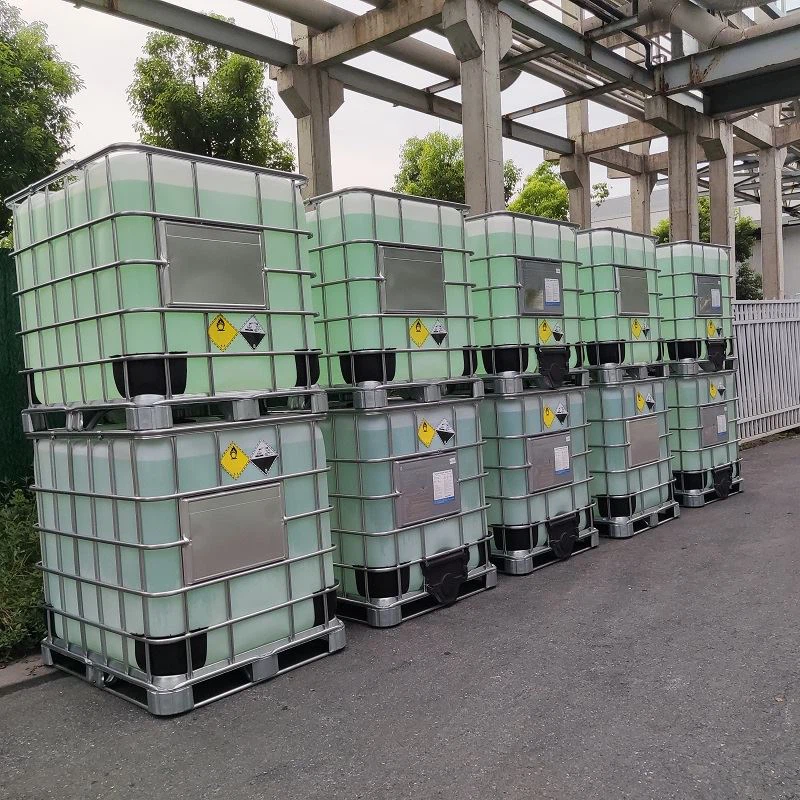
First off, let's talk a bit about 50% hydrogen peroxide. We've got some great products on offer. For instance, we have 50% Industrial Grade Hydrogen Peroxide H₂O₂ for Paper Bleaching. This stuff is perfect for paper mills looking to get that bright, white paper. And then there's 50% Industrial Grade H₂O₂ Hydrogen Peroxide for Peroxides Manufacture, which is a key ingredient in making other peroxides. Also, 50% Hydrogen Peroxide For Industrial Use is a versatile product used in various industrial processes.
Now, let's dive into the reaction between 50% hydrogen peroxide and boron compounds. Boron is a pretty unique element. It has a bunch of different compounds, like boric acid (H₃BO₃), boron trioxide (B₂O₃), and borates. Each of these can react with hydrogen peroxide in different ways.

Reaction with Boric Acid
When 50% hydrogen peroxide reacts with boric acid, it can form peroxoboric acid. The reaction is kind of a step - by - step thing. First, the hydrogen peroxide molecule gets involved with the boric acid structure. The hydrogen peroxide (H₂O₂) has this O - O bond, which is relatively weak. Boric acid has a trigonal planar structure with boron at the center and three hydroxyl groups (-OH) attached.
The reaction can be represented by the following equation:
H₃BO₃ + H₂O₂ ⇌ H₂BO₄⁻+ H⁺ + H₂O
In this reaction, one of the oxygen atoms from the hydrogen peroxide attaches to the boron atom in the boric acid. This forms a peroxoborate ion (H₂BO₄⁻). The reaction is an equilibrium reaction, which means it can go back and forth depending on the conditions like temperature, concentration, and pH.
The formation of peroxoboric acid is important in some cleaning and disinfection applications. Peroxoboric acid is a stronger oxidizing agent than hydrogen peroxide itself. It can break down organic matter more effectively, which is why it's used in some industrial cleaning products.
Reaction with Boron Trioxide
Boron trioxide (B₂O₃) is another common boron compound. When 50% hydrogen peroxide reacts with boron trioxide, it can form perborates. The reaction is a bit more complex than with boric acid.
B₂O₃ + 4H₂O₂ ⇌ 2Na₂B₂O₈+ 2H₂O (if in the presence of sodium hydroxide to form sodium perborate)
First, the hydrogen peroxide attacks the boron - oxygen bonds in the boron trioxide. The O - O bond in hydrogen peroxide breaks, and the oxygen atoms start to interact with the boron atoms. In the presence of a base like sodium hydroxide, the reaction leads to the formation of sodium perborate.
Sodium perborate is a well - known compound used in laundry detergents. It acts as a bleaching agent. When dissolved in water, it releases hydrogen peroxide slowly, which helps in removing stains from clothes.
Reaction with Borates
Borates are salts of boric acid. There are different types of borates, like sodium borate (Na₂B₄O₇) and potassium borate (K₂B₄O₇). When 50% hydrogen peroxide reacts with borates, the reaction depends on the specific borate and the reaction conditions.
For example, with sodium borate, in an alkaline solution, the reaction can lead to the formation of perborates similar to the reaction with boron trioxide. The hydrogen peroxide reacts with the borate anion, and the oxygen from the hydrogen peroxide gets incorporated into the borate structure.
The reaction conditions play a huge role in how these reactions proceed. Temperature is a big factor. Generally, increasing the temperature speeds up the reaction rate. But if the temperature gets too high, the hydrogen peroxide can decompose into water and oxygen.
2H₂O₂ → 2H₂O+ O₂
pH also matters a lot. In acidic conditions, the reactions might be slower, while in alkaline conditions, the formation of perborates and peroxoboric acid is more favorable.
The concentration of the 50% hydrogen peroxide and the boron compound also affects the reaction. A higher concentration of hydrogen peroxide usually means a faster reaction rate, but it also increases the risk of side reactions and decomposition.
Applications of the Reactions
The reactions between 50% hydrogen peroxide and boron compounds have a wide range of applications. In the cleaning industry, as I mentioned before, the formation of peroxoboric acid and perborates is used in cleaning agents. They can remove tough stains, disinfect surfaces, and deodorize.
In the textile industry, perborates are used as bleaching agents. They can whiten fabrics without causing too much damage compared to some other bleaching agents.
In the chemical industry, these reactions are used to synthesize other compounds. The perborates and peroxoboric acid can be used as starting materials for making more complex boron - containing compounds.
Safety Considerations
Working with 50% hydrogen peroxide is not something to take lightly. It's a strong oxidizing agent. It can react violently with many organic materials, causing fires or explosions. When handling it, you need to wear proper protective gear like gloves, goggles, and a lab coat.
When reacting it with boron compounds, you also need to be careful about the reaction conditions. Make sure you control the temperature and pH properly to avoid unwanted side reactions and decomposition.
Conclusion
So, there you have it! The reactions between 50% hydrogen peroxide and boron compounds are pretty fascinating. They have a lot of practical applications in various industries. If you're in an industry that could benefit from these reactions and need a reliable supplier of 50% hydrogen peroxide, don't hesitate to reach out. We're here to help you with all your hydrogen peroxide needs and can offer great advice on how to use it in your specific processes. Whether it's for paper bleaching, peroxide manufacture, or other industrial uses, we've got the right product for you. Let's start a conversation about your requirements and see how we can work together!
References
- Cotton, F. A., & Wilkinson, G. (1988). Advanced Inorganic Chemistry. John Wiley & Sons.
- Housecroft, C. E., & Sharpe, A. G. (2012). Inorganic Chemistry. Pearson Education.