


As a reliable supplier of 50% hydrogen peroxide, I've witnessed firsthand the remarkable properties and diverse applications of this powerful chemical. One of the most fascinating aspects of 50% hydrogen peroxide is its reactivity with transition - metal compounds. In this blog, we'll delve into the science behind these reactions, exploring the mechanisms, products, and real - world implications.
The Basics of 50% Hydrogen Peroxide
Hydrogen peroxide (H₂O₂) is a simple yet versatile compound composed of two hydrogen atoms and two oxygen atoms. A 50% hydrogen peroxide solution means that half of the solution's mass is hydrogen peroxide, and the other half is typically water. This relatively high concentration makes it a potent oxidizing agent, capable of driving a wide range of chemical reactions.
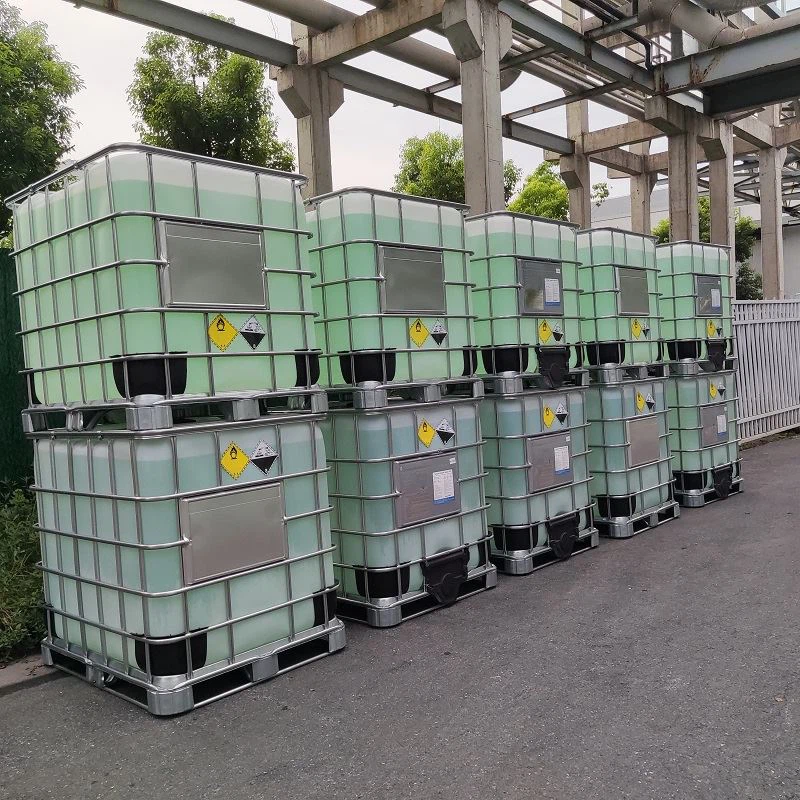
We offer high - quality 50% Industrial Grade H2O2 Hydrogen Peroxide for Chemical Synthesis, which is carefully formulated to meet the strict requirements of various industries. Our product is known for its purity and stability, making it an ideal choice for chemical synthesis processes.
Reactivity of 50% Hydrogen Peroxide with Transition - Metal Compounds
Transition metals are elements in the d - block of the periodic table. They are characterized by their variable oxidation states, which allow them to participate in a variety of redox reactions. When 50% hydrogen peroxide comes into contact with transition - metal compounds, a complex interplay of chemical processes occurs.
Oxidation Reactions
One of the most common types of reactions between 50% hydrogen peroxide and transition - metal compounds is oxidation. Hydrogen peroxide can donate oxygen atoms to the transition - metal ions, causing them to increase their oxidation state. For example, in the presence of iron(II) compounds, hydrogen peroxide can oxidize iron(II) to iron(III). The reaction can be represented by the following equation:
2Fe²⁺ + H₂O₂ + 2H⁺ → 2Fe³⁺ + 2H₂O
This reaction is often used in water treatment processes to remove iron from water. The oxidized iron(III) forms insoluble hydroxides, which can then be easily removed by filtration.
Our 50% Industrial Grade Hydrogen Peroxide H₂O₂ For Paper Bleaching can also be used in combination with transition - metal catalysts in the paper industry. The oxidation reaction helps to break down the lignin in wood pulp, making the paper whiter and brighter.
Catalytic Decomposition
Transition - metal compounds can also act as catalysts for the decomposition of hydrogen peroxide. The decomposition reaction of hydrogen peroxide is as follows:
2H₂O₂ → 2H₂O+ O₂
This reaction is relatively slow under normal conditions, but in the presence of transition - metal catalysts such as manganese dioxide (MnO₂), the reaction rate increases significantly. Manganese dioxide provides a surface for the hydrogen peroxide molecules to adsorb, facilitating the breakdown of the H₂O₂ into water and oxygen.
2H₂O₂ (catalyzed by MnO₂) → 2H₂O + O₂
This catalytic decomposition reaction has many practical applications. For example, in the aerospace industry, it can be used as a source of oxygen for rocket engines. Our 50% Hydrogen Peroxide For Industrial Use is suitable for such catalytic processes due to its high purity and reactivity.
Formation of Peroxo Complexes
In some cases, 50% hydrogen peroxide can react with transition - metal compounds to form peroxo complexes. These complexes contain a peroxide group (-O - O -) coordinated to the transition - metal ion. For example, when hydrogen peroxide reacts with titanium(IV) compounds, a yellow - colored peroxo - titanium complex is formed. This complex has unique spectroscopic and catalytic properties and is often used in analytical chemistry for the determination of titanium.
Factors Affecting the Reactions
Several factors can influence the reactions between 50% hydrogen peroxide and transition - metal compounds.

pH
The pH of the reaction medium plays a crucial role. In acidic solutions, hydrogen peroxide is a stronger oxidizing agent, and the oxidation reactions are more likely to occur. In basic solutions, the decomposition of hydrogen peroxide is favored, especially in the presence of transition - metal catalysts. For example, in a basic medium, the reaction between hydrogen peroxide and copper(II) ions can lead to the formation of copper(III) compounds through a series of redox and decomposition steps.
Temperature
Increasing the temperature generally increases the reaction rate. However, hydrogen peroxide is thermally unstable, and at high temperatures, it can decompose rapidly. Therefore, the temperature needs to be carefully controlled during the reactions to ensure the desired products are obtained.
Concentration
The concentration of both 50% hydrogen peroxide and the transition - metal compound affects the reaction. Higher concentrations of hydrogen peroxide can drive the reactions forward more quickly, but they also increase the risk of side reactions and decomposition. The concentration of the transition - metal compound can also influence the reaction rate and the nature of the products formed.
Real - World Applications
The reactions between 50% hydrogen peroxide and transition - metal compounds have numerous real - world applications.
Environmental Remediation
As mentioned earlier, the oxidation of iron and other metal ions by hydrogen peroxide is used in water treatment. Additionally, these reactions can be used to degrade organic pollutants in soil and water. For example, the Fenton reaction, which involves the reaction of hydrogen peroxide with iron(II) ions, generates highly reactive hydroxyl radicals. These radicals can break down a wide range of organic contaminants, such as pesticides and industrial solvents, into harmless substances.
Chemical Synthesis
In the chemical industry, the reactions are used to synthesize various organic and inorganic compounds. The oxidation and reduction capabilities of the reactions can be used to introduce functional groups into organic molecules or to prepare metal oxides with specific properties.
Conclusion
The reactivity of 50% hydrogen peroxide with transition - metal compounds is a rich and complex field of study. Understanding these reactions is crucial for various industries, from water treatment to chemical synthesis. As a supplier of 50% hydrogen peroxide, we are committed to providing high - quality products that can be used effectively in these reactions.
If you are interested in purchasing our 50% hydrogen peroxide products for your specific applications, we invite you to contact us for a detailed discussion. Our team of experts can provide you with technical support and help you find the best solution for your needs. Whether you are involved in chemical synthesis, paper bleaching, or environmental remediation, our products can meet your requirements.
References
- Housecroft, C. E., & Sharpe, A. G. (2012). Inorganic Chemistry. Pearson Education.
- Cotton, F. A., Wilkinson, G., Murillo, C. A., & Bochmann, M. (1999). Advanced Inorganic Chemistry. John Wiley & Sons.
- Pignatello, J. J., Oliveros, E., & MacKay, A. (2006). Advanced oxidation processes for water treatment. Critical Reviews in Environmental Science and Technology, 36(1), 1 - 84.