


Hey there! As a supplier of 50% Food Grade Hydrogen Peroxide, I often get asked about the differences between 50% Food Grade Hydrogen Peroxide and regular hydrogen peroxide. So, I thought I'd write this blog post to clear up any confusion and give you all the deets.
Concentration and Purity
First off, let's talk about concentration. Regular hydrogen peroxide you might find at the drugstore usually comes in a 3% - 6% concentration. This lower concentration is great for things like cleaning minor cuts and scrapes or bleaching your hair at home. It's relatively safe to handle because the risk of it causing harm is pretty low due to the low amount of hydrogen peroxide in the solution.
On the other hand, 50% Food Grade Hydrogen Peroxide, as the name suggests, has a much higher concentration. With half of the solution being pure hydrogen peroxide, it's a lot more potent. This high concentration makes it incredibly effective for industrial and food - related applications. But it also means it needs to be handled with extreme care.
When it comes to purity, food - grade hydrogen peroxide is held to a much higher standard. It's purified to remove any impurities, heavy metals, or other contaminants that could be harmful if ingested or come into contact with food. Regular hydrogen peroxide might contain stabilizers and other additives that are fine for general household use but not suitable for the food industry.
Applications
The applications of these two types of hydrogen peroxide are quite different, too.
Regular Hydrogen Peroxide
Regular hydrogen peroxide is a staple in many households. You can use it to disinfect small wounds. When you pour it on a cut, that fizzing action is actually it killing bacteria. It can also be used for cleaning around the house. You can use it to whiten your grout in the bathroom, remove stains from clothes, or even clean your dishwasher.
In the beauty world, it's used in hair bleaching products. The low concentration helps to lighten the hair without causing too much damage, although over - use can still lead to dry and brittle hair.
50% Food Grade Hydrogen Peroxide
As a supplier, I've seen firsthand how useful 50% Food Grade Hydrogen Peroxide is in the food industry. It's used in food processing to sanitize equipment and surfaces. For example, in a dairy processing plant, it can be used to clean milk tanks and pipes to prevent the growth of bacteria and other pathogens. This helps to ensure the safety and quality of the food products.
It's also used for food sanitation and packaging disinfection. When food is packaged, it's crucial to make sure the packaging is clean and free from any contaminants. 50% Food Grade Hydrogen Peroxide can be used to disinfect packaging materials like plastic containers or cardboard boxes. Check out 50% Food Grade Hydrogen Peroxide H2O2 For Food Sanitation And Packaging Disinfection to learn more about its use in this area.
Another important application is in the production of food additives. It can be used as an oxidizing agent in certain chemical reactions to create safe and useful food additives. You can find more details about 50% Food Additive Hydrogen Peroxide H₂O₂ for Food Processing Industry.
Safety Precautions
Handling these two types of hydrogen peroxide requires different safety measures.
Regular Hydrogen Peroxide
Since regular hydrogen peroxide has a low concentration, it's generally safe to handle at home. But you still need to be careful. Avoid getting it in your eyes, as it can cause irritation. If it does get in your eyes, rinse them thoroughly with water for at least 15 minutes and seek medical advice if the irritation persists. When using it on your skin, it might cause some mild burning or stinging, especially if you have sensitive skin.
50% Food Grade Hydrogen Peroxide
50% Food Grade Hydrogen Peroxide is a whole different ballgame. It's a highly corrosive substance. Direct contact with skin can cause severe burns, and inhaling its vapors can damage your respiratory system. When handling it, you need to wear proper personal protective equipment (PPE), including gloves, goggles, and a respirator. It should also be stored in a cool, well - ventilated area away from flammable materials.
Storage
The way you store these two types of hydrogen peroxide also differs.
Regular Hydrogen Peroxide
Regular hydrogen peroxide can be stored at room temperature in a cool, dark place. Keep it in its original container, and make sure the cap is tightly closed to prevent it from evaporating. It has a relatively long shelf - life, but over time, its effectiveness will gradually decrease.
50% Food Grade Hydrogen Peroxide
50% Food Grade Hydrogen Peroxide needs to be stored in a special container designed for handling corrosive substances. It should be kept in a cool environment, preferably below 20°C (68°F). Exposure to heat or light can cause it to decompose, releasing oxygen and potentially causing an explosion if the container is not properly ventilated.
Cost
Cost is another factor to consider. Regular hydrogen peroxide is very affordable. You can pick up a small bottle at the drugstore for just a few dollars. This low cost makes it accessible for everyday household use.
On the other hand, 50% Food Grade Hydrogen Peroxide is more expensive. The high - purity manufacturing process and the strict quality control measures add to the cost. But considering its effectiveness in industrial and food - related applications, the investment is often worth it for businesses in those sectors.
Conclusion
So, there you have it - the main differences between 50% Food Grade Hydrogen Peroxide and regular hydrogen peroxide. From concentration and purity to applications, safety, storage, and cost, they are two very different products.
If you're in the food processing industry, food sanitation, or involved in food packaging, 50% Food Grade Hydrogen Peroxide could be a game - changer for you. It offers a high - level of disinfection and safety that regular hydrogen peroxide just can't match. Check out 50% Food Grade Hydrogen Peroxide H2O2 for Food Sanitation and Packaging Disinfection for more information on how it can benefit your business.

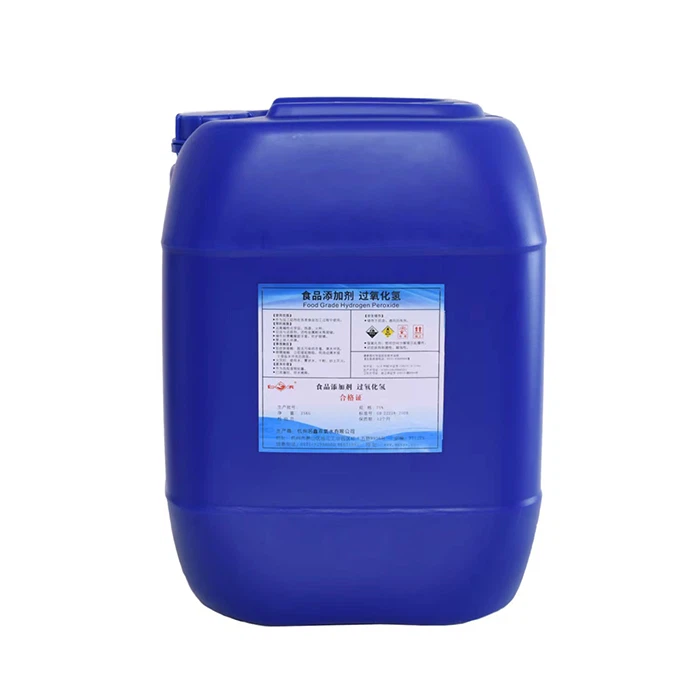
If you're interested in purchasing 50% Food Grade Hydrogen Peroxide for your business, feel free to reach out to me for more details and to start a procurement discussion. I'm here to help you find the best solution for your needs.
References
- Various industry guidelines on hydrogen peroxide use and safety.
- Product specifications from hydrogen peroxide manufacturers.