


Hydrogen peroxide is a well - known bleaching agent used in various industries, especially in the textile sector. As a supplier of hydrogen peroxide for bleaching, I often encounter questions from customers regarding its effectiveness. One such common query is whether hydrogen peroxide can bleach through multiple layers of fabric. In this blog, we will delve into the science behind hydrogen peroxide bleaching and analyze its potential to penetrate multiple fabric layers.
Understanding Hydrogen Peroxide Bleaching
Hydrogen peroxide (H₂O₂) is a powerful oxidizing agent. When it comes into contact with colored substances, the oxygen atoms in hydrogen peroxide react with the chromophores (the parts of a molecule that give it color). This reaction breaks down the chromophores, altering their chemical structure and reducing their ability to absorb visible light. As a result, the color of the fabric fades.
The bleaching process of hydrogen peroxide is influenced by several factors, including concentration, temperature, and the presence of catalysts. Higher concentrations of hydrogen peroxide generally lead to more rapid and effective bleaching. However, extremely high concentrations can also damage the fabric. Temperature also plays a crucial role. Warmer temperatures accelerate the reaction rate, but excessive heat can cause the hydrogen peroxide to decompose too quickly and may also harm the fabric. Catalysts, such as certain metal ions, can speed up the bleaching reaction, allowing for more efficient use of hydrogen peroxide.
Penetration Through Multiple Layers of Fabric
The ability of hydrogen peroxide to bleach through multiple layers of fabric depends on several aspects related to both the fabric and the hydrogen peroxide solution.
Fabric Properties
- Fabric Type: Different fabrics have different porosities and fiber structures. Natural fibers like cotton are more porous compared to synthetic fibers such as polyester. Cotton has a looser structure that allows liquids to penetrate more easily. Therefore, hydrogen peroxide is more likely to pass through multiple layers of cotton fabric compared to tightly - woven polyester. For example, a thick cotton quilt may allow the hydrogen peroxide solution to seep through several layers during the bleaching process, while a polyester raincoat may prevent the solution from reaching deeper layers.
- Fabric Thickness and Density: Thicker and denser fabrics present a greater challenge for hydrogen peroxide penetration. A thick, densely - woven woolen blanket will impede the flow of the hydrogen peroxide solution more than a thin, lightweight silk scarf. As the number of fabric layers increases, the resistance to penetration also grows. Each additional layer acts as a barrier, reducing the amount of hydrogen peroxide that can reach the inner layers.
Hydrogen Peroxide Solution Properties
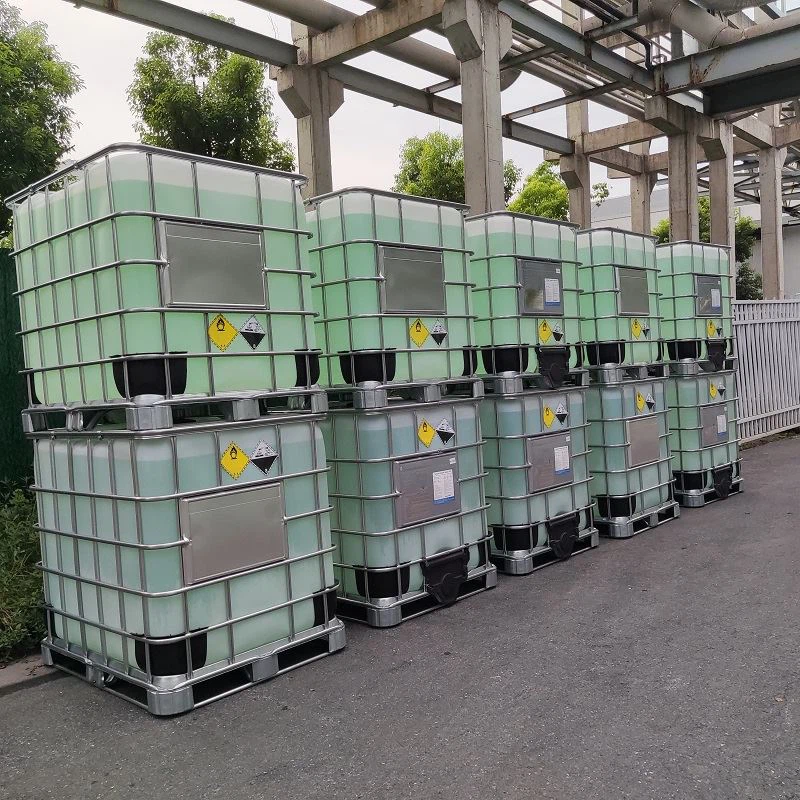
- Concentration: A higher - concentration hydrogen peroxide solution has a greater potential to penetrate multiple fabric layers. Our 50 Percent Industrial Grade Hydrogen Peroxide H₂O₂ for Textile Industry offers a relatively high concentration that can enhance the penetration ability. With a 50% concentration, the solution has more active oxygen molecules, which can more effectively break through the fabric layers and reach the chromophores within.
- Viscosity and Surface Tension: The viscosity and surface tension of the hydrogen peroxide solution affect its ability to spread and penetrate. A solution with lower viscosity and surface tension can flow more easily through the fabric pores. Additives can be used to modify these properties. For instance, certain wetting agents can reduce the surface tension of the hydrogen peroxide solution, allowing it to spread more evenly across the fabric surface and penetrate deeper layers.
Practical Experiments and Observations
To better understand the bleaching of multiple fabric layers, some practical experiments can be conducted. One approach is to stack several layers of the same fabric and immerse them in a hydrogen peroxide solution. By comparing the color change of each layer after a certain period, we can assess the penetration ability of the solution.
In a series of experiments, we used 500L Hydrogen Peroxide 50% to bleach stacks of cotton and polyester fabrics. For the cotton fabric stack, after soaking in the solution for 30 minutes at a moderate temperature, we observed a significant color change in the outer layers and a noticeable fading in the inner layers as well. However, for the polyester fabric stack, the outer layers showed some bleaching, but the inner layers remained largely unchanged. This indicates that hydrogen peroxide has a better chance of bleaching through multiple layers of porous natural fabrics compared to non - porous synthetic fabrics.
Implications for the Textile Industry
In the textile industry, the ability of hydrogen peroxide to bleach through multiple layers of fabric is of great importance. For large - scale textile bleaching operations, such as the production of bed sheets or multi - layer upholstery fabrics, understanding this property can help optimize the bleaching process.
If a textile manufacturer wants to achieve uniform bleaching across multiple layers of fabric, they need to carefully select the appropriate concentration of hydrogen peroxide. Our 50% Hydrogen Peroxide For Industrial Use can be a suitable choice for many applications. Additionally, adjusting the temperature and using catalysts can improve the penetration and bleaching efficiency.
Conclusion
In conclusion, hydrogen peroxide can bleach through multiple layers of fabric, but its effectiveness depends on a combination of fabric properties and the characteristics of the hydrogen peroxide solution. Porous natural fabrics like cotton are more likely to allow hydrogen peroxide penetration compared to synthetic fabrics. Higher concentrations of hydrogen peroxide, along with proper temperature control and the use of additives, can enhance the ability to reach deeper fabric layers.

As a supplier of hydrogen peroxide for bleaching, we are committed to providing high - quality products that meet the diverse needs of the textile industry. Whether you are a small - scale textile workshop or a large - scale manufacturing plant, we can offer the right hydrogen peroxide solutions for your bleaching processes. If you are interested in learning more about our products or have specific requirements for bleaching multiple layers of fabric, please feel free to contact us for further discussion and procurement negotiations.
References
- Bolton, J. R., Cater, S. R., & Tratnyek, P. G. (2001). Photochemical degradation of hydrogen peroxide in water: A kinetic study. Environmental Science & Technology, 35(16), 3307 - 3313.
- Muthu, S. S., & Li, Y. (2012). Sustainable Textiles and Clothing: An Introduction. Woodhead Publishing.
- Rengasamy, R., & Anbumani, S. (2011). Role of hydrogen peroxide in textile processing: A review. International Journal of Engineering Science and Technology, 3(5), 3423 - 3431.