


The main physical and chemical properties of hydrogen peroxide
Pure hydrogen peroxide (H2O2) is a light blue viscous liquid. Its aqueous solution is called hydrogen peroxide. It is a colorless and transparent liquid. The industrial specifications are 27.5%, 30%, 35%, 50% and 70%.
The density of 35% hydrogen peroxide at 20°C is 1.132g/ml.
Hydrogen peroxide (H2O2) has a boiling point of 150.2°C and a relative molecular weight of 34.01. It is soluble in water, ethanol, and ether, but insoluble in benzene and petroleum ether. The hydrogen peroxide with a concentration of more than 65% can easily cause explosion when it comes in contact with organic matter.
PH is a factor that affects the stability of hydrogen peroxide. It is relatively stable when it is acidic, and is the most stable when PH4±0.5. Generally, phosphoric acid is used as a stabilizer. It decomposes violently when the pH is greater than 8.
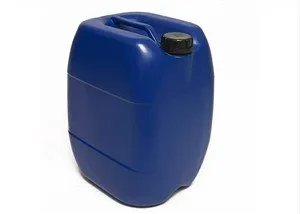
Hydrogen peroxide will decompose violently when encountering most of the metal impurities, so the hydrogen peroxide needs to be transported in plastic buckets (polyethylene or polytetrafluoroethylene), pure aluminum (purity greater than 99.5%) or stainless steel tankers. And not suitable for long-distance transportation.
Application fields of hydrogen peroxide
The downstream application field of hydrogen peroxide in my country is mainly in the paper industry (used in pulp bleaching and waste paper deinking. In the recycling of waste paper, the oxidative bleaching effect of hydrogen peroxide can make the waste paper have the same whiteness as the original pulp after removing the ink. Degree), accounting for about 37% of total consumption. In addition, the printing and dyeing industry (mainly used as a bleaching agent for fibers) accounts for about 19%, the chemical synthesis industry (mainly used for the production of epoxides or peroxides) accounts for about 32%, the sewage treatment industry accounts for about 6%, and other fields Accounted for 6%.
The market for papermaking hydrogen peroxide is mainly concentrated in Shandong and Central China.
Most of the markets for hydrogen peroxide used in the printing and dyeing industry are concentrated in Jiangsu and Zhejiang in East China. Affected by many factors such as environmental protection, printing and dyeing enterprises shut down more, and the proportion of hydrogen peroxide used in the printing and dyeing industry has decreased.
The application of hydrogen peroxide in the chemical synthesis industry is relatively scattered, and most companies have their own supporting hydrogen peroxide devices.
The main synthetic products are epoxy soybean oil, caprolactam, propylene oxide, thiourea dioxide, sodium percarbonate, sodium chlorite, etc. With the decline in the price of propylene and the increase in environmental protection requirements, the application of hydrogen peroxide as a raw material for the production of propylene oxide by the epoxidation of propylene will become the main field of growth in the application of hydrogen peroxide in the future.
Hydrogen peroxide can treat organic matter, remove starch, sugar, phenol, formaldehyde, sulfur, cyanide and other pollutants in sewage, and the treatment effect is very obvious. Sewage treatment has also begun to use a large amount of hydrogen peroxide in recent years, mainly because the overall production capacity of hydrogen peroxide in the early stage is small, the price is high, and the use cost is high. Now that the production capacity has increased, the hydrogen peroxide is slightly surplus, and the price has fallen, sewage treatment companies have only begun to use it, and there will be a significant increase in consumption in the later period.
Ultra-clean and high-purity electronic grade hydrogen peroxide is a very important high-purity reagent in the microelectronics industry. It is mainly used as a cleaning agent for semiconductor silicon wafers, an etchant and a photoresist remover. It can also be used for the preparation of advanced insulating layers and electroplating solutions. Inorganic impurity removal, processing of copper, copper alloy, gallium and germanium in the electronics industry, and etching and cleaning of solar silicon wafers.
Food-grade hydrogen peroxide can be used in dairy beverage packaging, equipment, pipeline disinfection, various food processing processes, and medical, environmental sanitation and other fields. It is suitable for the sterilization of dairy beverage filling machines and packaging materials. It is also used as a decolorizing agent for food fiber.
Hydrogen peroxide can also be used in cosmetics (hair bleaching, dyeing) and toothpaste preparation, electroplating solution purification and iron removal, cleaning and purification equipment, fuel cells, seed disinfection, agricultural waste processing, rocket chemical propellants, etc.
The concentration of food grade and electronic grade hydrogen peroxide is generally 30% and 35%, which are refined from industrial grade hydrogen peroxide.