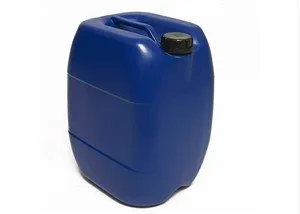


Hydrogen peroxide is an aqueous solution of hydrogen peroxide. The chemical formula of hydrogen peroxide is H2O2. Pure hydrogen peroxide is a light blue viscous liquid, which is miscible with water in any proportion and is a strong oxidant. Hydrogen peroxide is a colorless and transparent liquid, suitable for medical wound disinfection, environmental disinfection, and food disinfection. Under normal circumstances, it will slowly decompose into water and oxygen, but the decomposition rate is extremely slow.
The hydrogen peroxide solution is a colorless and transparent liquid, soluble in water, alcohol, and ether, but insoluble in benzene and petroleum ether. Pure hydrogen peroxide is a light blue viscous liquid with a melting point of -0.43 °C and a boiling point of 150.2 °C. The molecular configuration of pure hydrogen peroxide will change, so the melting and boiling point will also change. The solid density at the freezing point is 1.71g/cm³, and the density decreases with increasing temperature. Its degree of association is greater than H2O, so its dielectric constant and boiling point is higher than water.
Hydrogen peroxide decomposition
Prepare materials
Hydrogen peroxide (H2O2), manganese dioxide (MnO2), gas cylinder, beaker, wood strip with sparks, gas generator (liquid gas), gas collection device (drainage) sink.
experiment procedure
After checking whether the rubber stopper is well sealed, pour an appropriate amount of hydrogen peroxide into the Erlenmeyer flask, and then add manganese dioxide, which will react to produce water (in the Erlenmeyer flask) and oxygen. It can be used in gas cylinders, and wood strips with sparks can be put into gas cylinders to observe whether the wood strips re-ignite. If they re-ignite, it means that the gas is oxygen.
Reaction equation
2H₂O₂==2H₂O+O₂ (manganese dioxide is written on the equal sign)