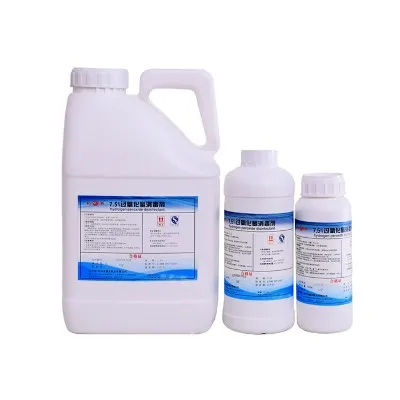


Hydrogen peroxide is unstable and easily decomposes into oxygen and water, so it is quite safe.
For example, studies have confirmed that the residual hydrogen peroxide in water hair products will gradually disappear during the soaking process, and subsequent processing will quickly destroy it.
In 2004, the evaluation opinion of the Expert Committee of the World Health Organization (JECFA) believed that the residual level of hydrogen peroxide in food was very low, and it was almost degraded by the time consumers eat it in the mouth. It is not a concern at all. There is also no need to formulate a "safe intake".
The US FDA also lists hydrogen peroxide as a GRAS substance (that is, it is quite safe), and it is usually used in the amount required for production (that is, there is no restriction on the amount).
For example, the maximum amount used in smoked herring and pickled eggs is "to achieve oxidation and antibacterial effect", and the maximum amount used in the processing of tripe is "to achieve bleaching effect".
In addition, hydrogen peroxide can also be used to clean and disinfect fruits and vegetables.
Medical hydrogen peroxide with a concentration of 3% is generally not a problem even if it is swallowed by mistake, but drinking it directly with a concentration of 30% will burn the digestive tract.
However, this kind of situation is extremely rare, because most people do not have access to such a high concentration of hydrogen peroxide.
In addition, hydrogen peroxide can quickly decompose in heavy metal salts, alkaline environments and violent impacts, and even cause an explosion.
However, this generally occurs during the production, storage and transportation of hydrogen peroxide, and consumers are unlikely to encounter it.
The application of hydrogen peroxide in food has a history of at least 50 years and has always been considered safe and reliable.
In the early 1980s, scientists discovered that it may damage the gastrointestinal tract of mice and may even be carcinogenic.
However, in 1988, after careful research by the US FDA's evaluation committee, the evidence that hydrogen peroxide caused cancer was insufficient.
The 1999 evaluation opinion of the International Agency for Research on Cancer also believes that hydrogen peroxide has insufficient evidence to cause cancer in humans and animals, and is classified into three categories of substances (substances that are unlikely to cause cancer). The same category includes tea and vitamins. K, rust and so on.
A few in vitro cell experiments have found that hydrogen peroxide has a certain genetic toxicity, but it has not been found in animal experiments.
This is because the animal body has an adequate defense system, it is difficult for it to enter the body's cells through the digestive tract and damage DNA.
In addition, there is not enough evidence that it affects the reproductive ability of animals.
Therefore, low-concentration hydrogen peroxide is non-toxic, it is disinfected by oxidation. Medical hydrogen peroxide can rinse the mouth, wash wounds and disinfect. Similarly, after soaking meat and food with hydrogen peroxide, it is no problem after rinsing. Hydrogen peroxide is easily decomposed and volatilized and becomes pure water and oxygen gas after volatilization. Of course, it is of course harmful if you regularly use the skin to contact hydrogen peroxide.