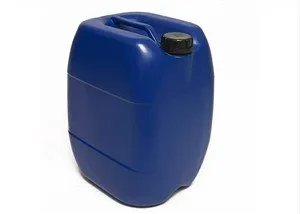



Food grade hydrogen peroxide has the characteristics of broad-spectrum, high-efficiency and long-lasting sterilization. After the sterilization process is completed, it is decomposed into oxygen and water without producing toxic residues. It does not need to be washed with water and does not pollute the environment.
It is an environmentally friendly disinfection. Agent. For example, some countries add a few milligrams of hydrogen peroxide per kilogram of tap water instead of chlorine as a fungicide. In the disinfection of drinking water in cities in my country, traditional "chlorine bleach" has been used as a bleaching agent. The World Health Organization believes that traditional "chlorine bleaching" is used in water plants. Chlorine reacts with organic matter in the water such as humic acid to generate new and more powerful organic pollutants such as trihalomethane and carbon tetrachloride, thus making the tap water depleted. Carcinogenicity and mutagenicity are stronger than natural water.
Using "chlorine bleach" to disinfect tap water is not as good as using hydrogen peroxide, which is safer and more environmentally friendly. Even if hydrogen peroxide is not added, there is hydrogen peroxide in our body. Reasonable application of hydrogen peroxide will not cause damage. But there is a moderate amount of problems here, and there is a degree of certainty. For example, pigments exist in nature. The flour we eat contains carotene, which is a kind of nutrient substance. If a brightener is added to bleach, the nutrient substance is destroyed. In the same way, if the concentration of hydrogen peroxide is too high, it will destroy the nutrients of the food, and if the residual amount is large, it will cause harm to the human body. As a strong oxidant, its main function is to disinfect and bleach, and it can bleach food, but too much residue can also "bleach the organs of the human body."