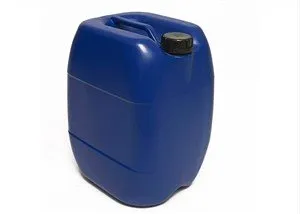


CAS Number: 7722-84-1
MDL number: MFCD00011333
EINECS number: 24895576
RTECS number: MX0899000
BRN number: 3587191
PubChem number: 24895576
Physical data:
1. Properties: colorless and transparent liquid with faint special smell.
2. Melting point (℃): -0.4
3. Boiling point (℃): 150.2
4. Relative density (water = 1): 1.46 (no water)
5. Relative vapor density (air=1): 1
6. Saturated vapor pressure (kPa): 0.67 (30℃)
7. Critical pressure (MPa): 20.99
8. Octanol/water partition coefficient: -1.36
9. Solubility: soluble in water, ethanol, ether, insoluble in benzene, petroleum ether.
Toxicological data:
1. Acute toxicity LD50: the concentration is 90%, 376mg/kg (rat oral)
2. Irritation Rabbit eyes: 90%, 1mg, severe irritation.
3. Mutagenicity Microbial mutagenicity: Salmonella typhimurium 6μg/dish. Sister chromatid exchange: hamster lung 353μmol/L. DNA damage: human fibroblasts 28μmol/L; human lymphocytes 100μmol/L. Unscheduled DNA synthesis: human fibroblasts 1mmol/L.
4. Carcinogenicity IARC carcinogenicity review: G3, there is insufficient evidence for human and animal carcinogenicity.
Ecological data:
Other harmful effects: strong explosive oxidizer. Hydrogen peroxide itself is not combustible, but it can react with combustibles to release a large amount of heat and oxygen, causing fire and explosion. Hydrogen peroxide is the most stable when the pH value is 3.5-4.5. It is easily decomposed in alkaline solution and can also be decomposed when exposed to strong light, especially short-wave radiation. When heated to above 100°C, it begins to decompose rapidly. It forms explosive mixtures with many organic substances such as sugar, starch, alcohols, petroleum products, etc., and can explode under the action of impact, heat or electric spark. Hydrogen peroxide quickly decomposes when it comes in contact with many inorganic compounds or impurities, causing an explosion, releasing a lot of heat, oxygen and water vapor. Most heavy metals (such as iron, copper, silver, lead, mercury, zinc, cobalt, nickel, chromium, manganese, etc.) and their oxides and salts are active catalysts. Dust, cigarette ash, carbon powder, rust, etc. can also Speed up decomposition. Hydrogen peroxide with a concentration of more than 74% can cause a gas phase explosion in a closed container with an appropriate ignition source or temperature.
Nature and stability:
1. Extremely unstable, it will decompose when exposed to heat, light, rough surface, heavy metals and other impurities, and release oxygen and heat at the same time. It has strong oxidation ability and is a strong oxidant. It is stable and corrosive in the presence of acid. High concentrations of hydrogen peroxide can burn organic substances. Interaction with manganese dioxide can cause an explosion. Wear protective clothing, gloves made of polyethylene or polyvinyl chloride, and transparent protective glasses and masks made of polymer materials when working. If it touches the skin or splashes into the eyes, rinse with warm water. The 30% aqueous solution has a melting point of -32.6°C, a boiling point of 107°C, and a relative density of 1.132. Hydrogen peroxide has strong oxidizing properties, but in some cases it can also be used as a reducing agent. High concentration hydrogen peroxide solution can cause explosive decomposition due to impurities or metal powder. In addition, when high-concentration hydrogen peroxide comes into contact with the skin, it will cause edema, so once the skin comes into contact with high-concentration hydrogen peroxide, rinse immediately with plenty of water. 2. It can be arbitrarily miscible with water and alcohol, and the aqueous solution is weakly acidic. It is oxidizing. It is corrosive and can cause burns. It will decompose into water and oxygen during storage. A small amount of acetylaniline and acetylethoxyaniline can be added as stabilizers. This product is corrosive. If the liquid is splashed on the skin, it will quickly become white and have a burning sensation. The gas will irritate the eyes and lungs. 3. The chemical properties of hydrogen peroxide are weakly acidic, oxidizing, and reductive instability. Hydrogen peroxide has both oxidizing and reducing properties, and oxidizing is the main one; when hydrogen peroxide encounters strong oxidizing agents, it will undergo a reduction reaction; when hydrogen peroxide undergoes oxidation or reduction, it does not cause damage to the environment. Impurities, therefore, hydrogen peroxide is an ideal oxidant or reducing agent for the preparation and removal of impurities. 4. High-concentration hydrogen peroxide solution and vapor have strong irritant and corrosive effects on the human body. If a solution with a content of more than 30% comes in contact with the skin, it will turn white and sting; contact with the eyes can cause inflammation and even burns. The vapor content above 50mg/kg can strongly irritate the eyes and mucous membranes and cause respiratory disorders. The human body's short-term exposure to hydrogen peroxide vapor has a concentration limit of 75mg/kg. If it exceeds 100mg/kg, it is life-threatening. A lot of water should be used to rinse the body contact area. Industrial hydrogen peroxide with a concentration of less than 86%, as long as the conditions meet the requirements, will not explode at room temperature. Products with a concentration higher than 86% can only explode when there is a high-energy initiating source. Hydrogen peroxide in the vapor phase explodes under certain conditions. Its explosive limit concentration under atmospheric pressure is about 26mol/m3. The gas phase containing 90% H2O2 is safe as long as it is kept below 115°C.
USE:
1. In the chemical industry, it is used as a raw material for the production of inorganic or organic peroxides such as sodium perborate, sodium percarbonate, peroxyacetic acid, sodium chlorite, and thiourea peroxide; used to produce metal salts or other compounds to remove Iron and other heavy metals; used in electroplating solution to remove inorganic impurities and improve the quality of plated parts.
2. It is mainly used as a fungicide in medicine. Used as a bleaching agent for wool, raw silk, fur, feathers, ivory, pig bristles, pulp, fat, etc. It can also be used as food processing, food bleaching, antiseptic and preservative. In recent years, it is widely used for sterilization of paper-plastic aseptic packaging materials before packaging. Used in the treatment of industrial sewage and sludge, it is an ideal pollution control agent for the ecological industry. High concentration hydrogen peroxide can be used as rocket fuel and oxygen source.
3. Used as a cleaning and corrosive agent in the electronics industry.
4. The product is also used in sewage treatment for deodorization, sterilization and algae killing. It is also widely used as a bleaching agent in the textile printing and dyeing and papermaking industries and as a bleaching preservative in the food industry.
5. Hydrogen peroxide can be used to remove organic impurities in the electroplating solution, and can also be used for the chemical polishing of copper and low carbon steel and the chemical etching of copper.
6. Used in bleaching, medicine, and analytical reagent.